

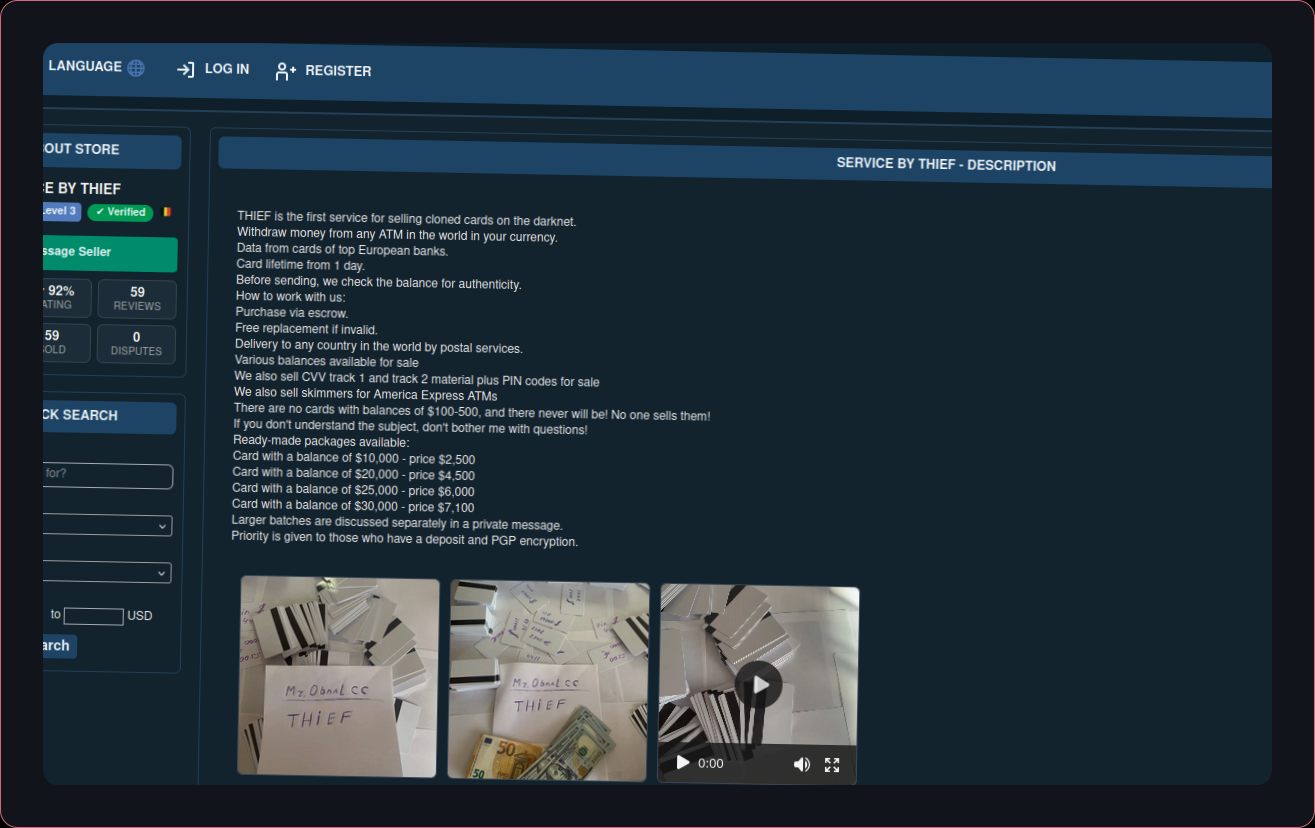
In November 2024, Mark T., a 34-year-old from Tampa Bay, believed he had discovered a lucrative opportunity in the dark web. He purchased a collection of six cloned debit cards, complete with PIN codes, for $480 in cryptocurrency. These cards contained fraudulent magnetic tracks from genuine accounts and allowed him to withdraw a staggering $4,200 across three ATMs. However, his luck was short-lived, culminating in his arrest just three days later, highlighting the efficiency of ATM security measures and the digital evidence trail that ultimately led to his capture.
Understanding the Carding Process: A Sequential Breakdown
Carding, the illicit trade and utilisation of pilfered banking information, remains a persistent form of cybercrime. Mark's approach exemplifies a traditional carding methodology. The process includes the following steps: 1. Data Collection: This involves skimming or data breaches where criminals acquire magnetic card tracks from devices like skimmers or through phishing schemes. 2. Card Creation: The stolen data is embossed onto blank plastic, mimicking a legitimate card with the victim's details. 3. PIN Access: When the PIN is obtained via methods such as hidden cameras, the buyer has everything needed for cash withdrawals. 4. Cash Extraction: The criminal then extracts money from ATMs before the victim can react. 5. Money Laundering: Finally, the extracted cash is converted into cryptocurrency, enabling the criminal to obfuscate their trail. Mark procured the cloned cards through a discreet marketplace, paying with Monero to enhance anonymity. Delivered in unmarked parcels, the transaction appeared seamless, blind to the critical oversight regarding ATM functionalities as evidence gatherers.
The Oversight: ATM Cameras
A modern ATM functions far beyond being a mere cash dispenser; it operates as a comprehensive surveillance mechanism. Typical ATMs house numerous features that contribute to security, including: - Built-in Cameras: These capture high-definition footage, often supplemented with night vision capabilities. - Hidden Cameras: Many models incorporate additional cameras positioned to monitor activities from multiple angles. - Transaction Logging: Each withdrawal is meticulously documented, recording precise timestamps, amounts, and card identifiers. - Geolocation: ATMs maintain awareness of their physical location, transmitting this data to banking logs. - Network Activity: Every transaction request is logged, detailing connection information. When Mark approached the fourth ATM in a Tampa suburb and withdrew $700, the built-in camera captured his face clearly in a straightforward profile view. This unguarded moment, recorded in 23 seconds of footage, became pivotal evidence.
The Investigation Timeline: Rapid Progression of Events
The investigation into Mark’s activities unfolded rapidly, demonstrating the efficiency of modern banking fraud prevention mechanisms. The key timeline consisted of: - Day 1: Reports of unauthorised withdrawals surfaced from three victims in Florida, Georgia, and North Carolina, prompting them to alert their banks. The banks blocked the compromised cards and escalated the issue to an early warning fraud system. - Day 3: Bank algorithms detected a consistent withdrawal pattern involving the same set of cloned cards across multiple states, triggering a red flag. Consequently, the case was escalated to the bank’s internal fraud investigation unit. - Day 5: The bank referred the case to the U.S. Secret Service (USSS), tasked with financial crime investigations. Analysts requested transaction logs and footage from the ATMs involved. - Day 8: Analysis of the ATM footage resulted in a clear facial image of Mark, which matched records from the Department of Public Safety. Concurrent transaction analysis revealed that all withdrawals occurred within a 40-mile radius of his home. - Day 12: Investigators secured a warrant to gather electronic evidence, leading to additional scrutiny of Mark’s online activity related to his purchases. - Day 14: A search warrant was executed at his residence, where investigators found the cloned cards, a magnetic stripe reading device, and a laptop with a digital footprint leading back to dark web marketplaces. - Day 15: Mark was apprehended. During questioning, he admitted to purchasing the cards and withdrawing cash from four of them, while the remaining two had already been deactivated by the bank.
Quantifying the Fallout: Financial and Legal Repercussions
The repercussions of Mark’s actions can be illustrated through a series of pertinent figures that highlight the severity of his criminal endeavour: | Withdrawals | Amount Withdrawn | Cost of Cards | Days from Withdrawal to Arrest | Sentence Duration | Fine and Restitution | Supervised Release | |---|---|---|---|---|---|---| | 4 | $4,900 | $480 | 15 | 60 months | $22,000 | 3 years | Understanding these numbers reinforces the impact of rapid illicit gains followed by swift justice, showcasing how quickly a fraudulent operation can be dismantled.
Cryptocurrency: The Illusion of Anonymity
Mark opted for Monero—known for its supposed anonymity—when purchasing the cloned cards. Despite this choice, investigators traced the transaction back to him, revealing a critical vulnerability in his plan: the centralized exchange he used for buying Monero required KYC verification, linking his identity to the purchase. This pivotal connection provided investigators with essential evidence. Additionally, the timing of his transactions created a tight timeline, further cementing his involvement. Physical evidence played a crucial role, as the cloned cards recovered from his home contained data matching that of the victims. Lastly, video evidence from the ATM served as undeniable proof of Mark's criminal actions, highlighting that anonymity can be easily compromised when physical evidence aligns with digital trails.
Identifying Mistakes: Mark's Missteps
Mark's downfall stemmed from several critical errors that ultimately led to his arrest. These include: 1. Geographic Concentration: All ATM withdrawals were executed within a 40-mile radius of his residence, raising immediate red flags for fraud detection systems. 2. Lack of Disguise: His failure to obscure his identity allowed for easy identification through video footage captured at the ATM. 3. Centralised Exchange Usage: By purchasing Monero through a KYC-compliant exchange, he inadvertently linked his identity to the illicit transactions. 4. Home Storage of Evidence: The presence of incriminating items, including cards and a magnetic stripe reader, solidified the case against him. 5. Excess Cash at Home: The $3,200 seized mirrored ATM withdrawal amounts, providing further incriminating evidence. 6. Time Efficiency: Rapid withdrawals raised suspicions. Distributing the withdrawals over a longer period might have delayed detection, but the captured video would still have implicated him.
Security Lessons: Implications for the Future
Mark's case underscores how robust security systems can effectively counteract perceived anonymity in cybercrime. Several key insights emerge: Banking anti-fraud measures are often the first line of defence, employing automatic pattern detection, geolocation, and scoring models to thwart criminal activity before human intervention occurs. The synergy between physical and digital forensics is essential; the ATM video provided a crucial visual link, but without transaction logs, its utility would be diminished. Additionally, the use of 'anonymous' cryptocurrencies does not guarantee true anonymity due to KYC requirements that link identities to transactions. Moreover, customer education remains vital; victims need to be vigilant and proactive in reporting fraud to mitigate potential losses and enhance security measures.
The Consequences of Cybercrime: A Cautionary Tale
In March 2025, Mark T. pleaded guilty to charges related to fraud and money laundering, resulting in a 60-month federal prison sentence and an additional three years of supervised release. Alongside a sizable fine of $22,000, he was mandated to provide restitution to his victims. The judge noted Mark's role as a purchaser rather than an orchestrator, highlighting that the buyer faces the most immediate consequences. This case serves as a stark reminder of the realities of cybercrime; while it may seem lucrative, the risks of detection and punishment are very real.
Mark's transactions via the darknet marketplace illustrate the perils of engaging in illicit activities without considering the potential consequences.
Questions readers ask
- What is carding?
Carding refers to the practice of using stolen credit card information to make fraudulent transactions, typically involving ATM withdrawals or online purchases.
- How do criminals create cloned debit cards?
Cloned debit cards are created by skimming card information from legitimate cards and then embossing that data onto blank plastic cards, often paired with stolen PINs.
- What role do ATMs play in identifying criminals?
Modern ATMs are equipped with surveillance systems, including cameras and transaction logs, which can capture vital evidence that links individuals to fraudulent activities.
- Why didn't cryptocurrency protect Mark from detection?
Despite using Monero for anonymity, Mark's identity was linked through KYC verification at a centralized exchange, making it possible for investigators to trace his activities back to him.